
Why Interior Door Installation Matters
Interior doors do more than separate rooms. They help control privacy, reduce noise, support energy efficiency, and add polish to your home’s overall look. A well-installed door opens smoothly, latches properly, and aligns cleanly with the frame, which makes a noticeable difference in daily comfort. Whether you are replacing an old door or upgrading the style of your interior, proper installation is the key to lasting results.
Many homeowners focus on the door slab itself, but the frame, hinges, and fit are just as important. Even a beautiful door can look and perform poorly if it is hung unevenly or trimmed incorrectly. That is why understanding the installation process is helpful, even if you plan to hire a professional.
Tools and Materials You’ll Need
Before starting, gather the right tools and materials. Being prepared helps the project move more smoothly and reduces mistakes.
- Prehung or slab interior door
- Measuring tape
- Level
- Pry bar
- Hammer and nails or trim screws
- Shims
- Screwdriver or drill
- Utility knife
- Wood filler and paint or stain
If you are installing a slab door instead of a prehung unit, you will also need the existing frame in good condition and the exact hinge and knob placement measured carefully. For many homeowners, prehung doors are easier because the door arrives already set in a frame with hinges attached.
Measure the Opening Accurately
Good interior door installation starts with careful measuring. Measure the height, width, and thickness of the existing doorway opening. Check the floor for unevenness and measure in several places, since older homes often have openings that are slightly out of square.
When choosing a replacement door, make sure it matches the opening size and swing direction. A door that swings the wrong way can interfere with furniture, walls, or light switches. Also confirm the rough opening leaves enough room for shimming and minor adjustments. Taking time here can prevent costly problems later.
Remove the Old Door and Frame
If you are replacing an existing door, begin by removing the old one. Start by taking the door off its hinges. Then remove trim carefully with a pry bar so you can reuse it if it is still in good condition. If the frame is being replaced, remove the old jamb and clean the opening of nails, caulk, and debris.
Inspect the rough opening for damage, rot, or moisture issues. If you find any problems, repair them before proceeding. A solid, level opening gives you the best chance of a successful installation.
Install a Prehung Interior Door
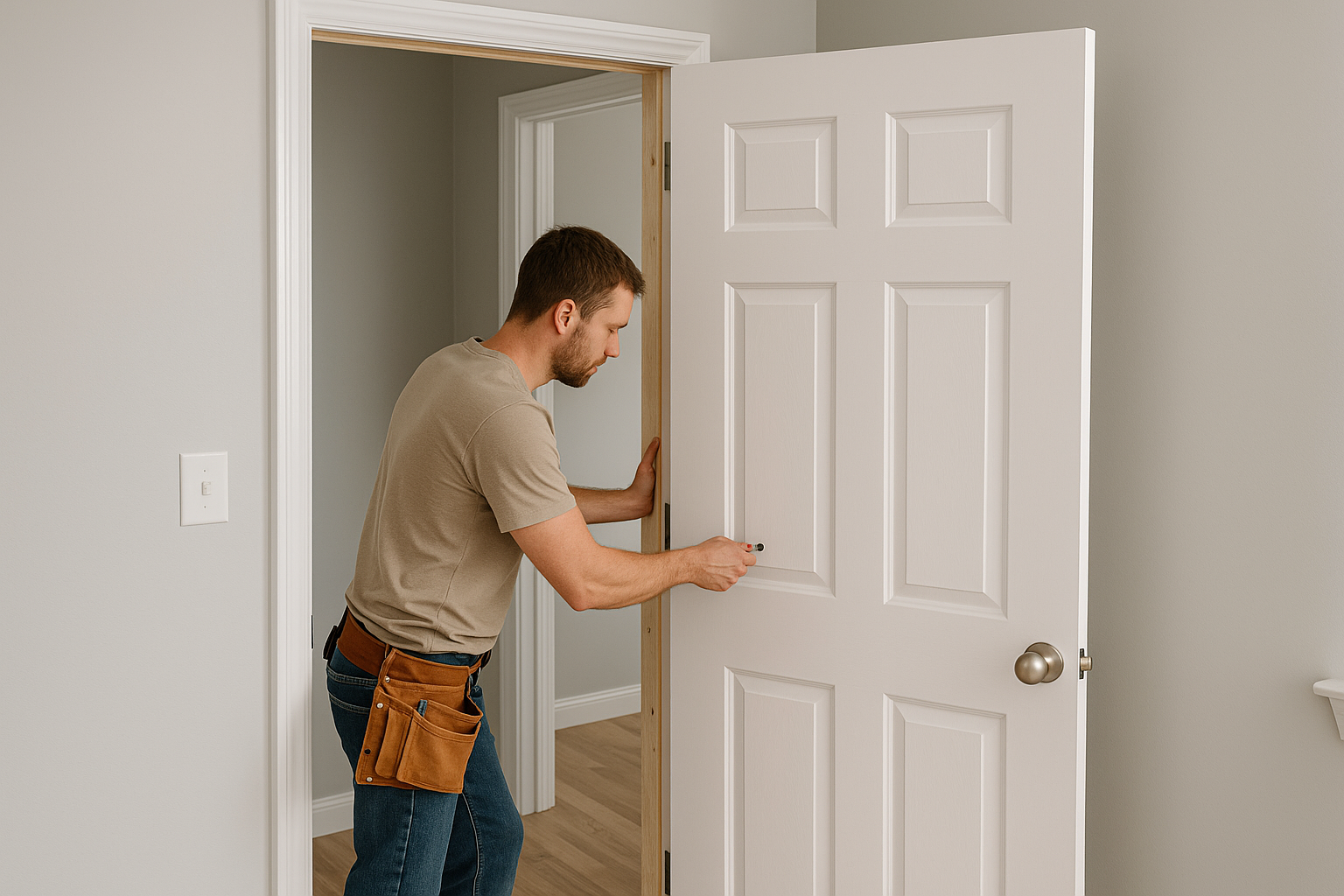
Prehung doors are often the most straightforward choice for interior door installation. The door comes attached to the frame, which makes alignment easier. Set the assembled unit into the rough opening and use shims to adjust it until the jamb is plumb and square.
Check the hinge side first, since that side determines how well the door will operate. Secure the frame at the hinge locations, then test the swing before fastening the latch side. The gap around the door should be even, and the door should open and close without rubbing or sticking. Once everything is aligned, secure the frame with screws or nails and trim the excess shim material.
Common Fit Checks
- The door should not scrape the floor
- The reveal should be even around the edges
- The latch should catch without force
- The door should stay open or closed without drifting
Install a Slab Door
If you are keeping the existing frame, installing a slab door requires more precision. First, position the new door in the opening and mark the hinge locations. If the new slab does not already have hinge mortises, you will need to cut them carefully so the hinges sit flush.
Next, mark the knob and latch hardware locations. Drill the necessary holes, then hang the door and test the fit. It may need trimming along the bottom or sides to allow proper clearance. This step is where patience matters, because small adjustments can significantly improve the final result.
Hang the Door and Test the Hardware
Once the door is in place, attach the hinges and check the swing. Open and close the door several times to make sure it moves freely. Then install the latch, strike plate, and handle set. If the latch misses the strike plate, adjust the plate slightly until the door closes securely.
For interior doors, a smooth latch and quiet closing action are signs of a good installation. If needed, make minor hinge adjustments or plane the edge of the door to improve the fit. Don’t rush this stage; the final hardware alignment determines how the door performs every day.
Finish the Trim and Final Details
After the door is hung and operating correctly, reinstall or replace the trim. Nail the casing in place, fill gaps with caulk if needed, and cover nail holes with wood filler. Once the filler dries, sand lightly and paint or stain the door and trim to match the room.
Finishing touches matter because they give the project a polished, professional appearance. Even small imperfections around the frame can stand out, so take a little extra time to clean up the edges and create a smooth transition between the door and the wall.
When to Hire a Professional
While many homeowners can handle a straightforward interior door installation, some situations are better left to a professional. Consider getting help if the opening is badly out of square, the walls are damaged, or the door requires custom fitting. Complex installations, such as oversized doors or specialty styles, can also benefit from expert attention.
Hiring a professional can save time and reduce frustration, especially if you want guaranteed results. A skilled installer can quickly diagnose issues with the frame, subfloor, or hardware and make the right adjustments.
Conclusion
Interior door installation is a project that blends precision, patience, and the right tools. With careful measuring, proper alignment, and attention to finishing details, you can improve both the function and appearance of your home. Whether you choose a prehung door or a slab replacement, a well-installed interior door adds comfort and value for years to come.