
Why Cabinet Redesign Matters
Cabinet redesign is one of the most effective ways to refresh a kitchen, bathroom, laundry room, or built-in storage area without starting from scratch. Cabinets take up a large visual and functional portion of a room, so improving their layout, style, and storage potential can dramatically change how the entire space looks and works.
Whether your cabinets feel dated, difficult to use, or simply no longer match your style, a thoughtful redesign can solve those problems while adding long-term value to your home. In many cases, you do not need a full remodel to get a major transformation. Small changes such as updated doors, better organization, and improved finishes can make a significant difference.
Start with a Clear Plan
A successful cabinet redesign begins with understanding what is not working. Before choosing colors or hardware, take time to assess how the cabinets are used every day. Are the shelves too deep? Do drawers stick? Is there wasted space above or below key storage areas? Identifying pain points helps guide your design decisions.
It is also helpful to think about your goals. Some homeowners want a more modern look, while others need better storage for cookware, pantry items, or cleaning supplies. A redesign works best when it balances visual appeal with practical improvements. Make a list of must-haves, nice-to-haves, and things that can be removed or simplified.
Measure Before You Make Changes
Accurate measurements are essential. Record cabinet height, width, and depth, along with the placement of appliances, plumbing, and outlets. These details help you avoid costly mistakes and make sure new doors, inserts, and hardware fit properly. If you are changing cabinet layouts, measurements become even more important.
Choose a Style That Fits Your Home
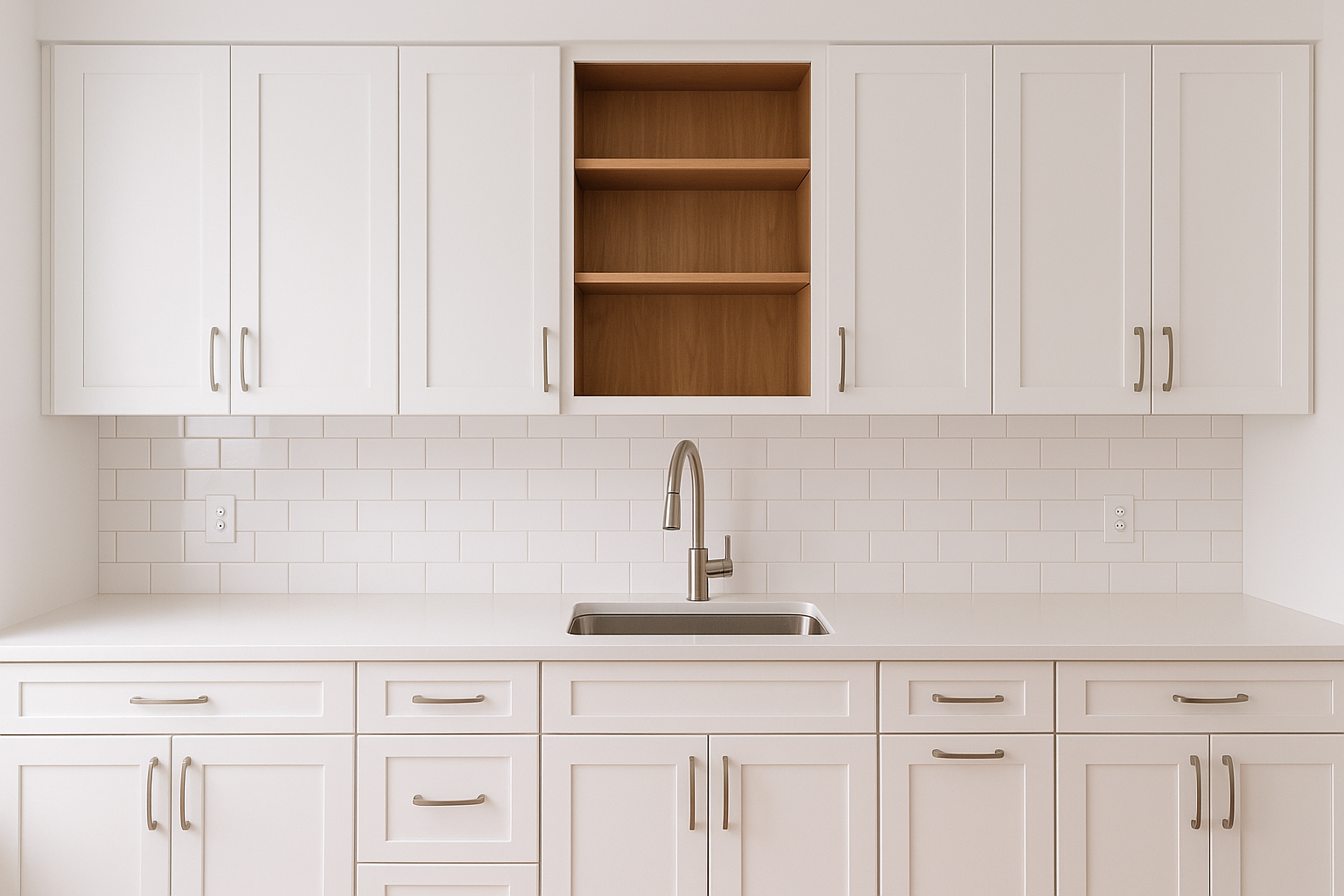
Cabinet redesign gives you the chance to match your storage to your home’s overall personality. A clean, flat-panel look can create a sleek contemporary feel, while shaker-style cabinets offer a classic appearance that works in many settings. Raised-panel designs, glass-front doors, and natural wood finishes can add warmth and character.
Think about how the cabinets connect with nearby surfaces such as countertops, flooring, backsplash, and wall color. When these elements work together, the room feels cohesive. You do not need every detail to match exactly, but the finishes should complement one another.
Consider Color and Finish Carefully
Color has a major impact on the final result. Light finishes can make a small room feel brighter and more open, while darker tones can add depth and sophistication. Matte finishes often create a softer, more modern look, while glossy surfaces reflect light and feel fresh and polished. If you are unsure, test samples in both natural and artificial light before making a final decision.
Improve Function with Smart Storage Solutions
One of the greatest benefits of cabinet redesign is the ability to improve how storage works. A beautiful cabinet is valuable, but a cabinet that is easy to use every day is even better. Smart storage upgrades can help reduce clutter, increase accessibility, and make daily tasks less frustrating.
Pull-out shelves, drawer organizers, vertical dividers, lazy Susans, spice racks, and tray storage inserts are all practical options worth considering. Deep drawers are especially useful for pots, pans, and small appliances, while narrow pull-outs can turn awkward gaps into efficient storage zones. If you have upper cabinets, interior shelf risers can help you use vertical space more effectively.
Think About Accessibility
A well-designed cabinet layout should work for everyone in the household. Easy-to-reach items should be stored in the most accessible locations, while heavier or less frequently used items can go higher or lower. If mobility is a concern, soft-close drawers, pull-down shelving, and wider openings can make a big difference.
Decide Whether to Reface, Refinish, or Replace
Cabinet redesign can take several forms depending on the condition of your existing cabinets and your budget. Refacing is a popular choice when the cabinet boxes are in good shape but the doors and fronts need a new look. This approach often includes new doors, drawer fronts, and veneer or laminate on visible surfaces.
Refinishing is another option if you like the cabinet style but want a new color or updated surface. Painting or staining can dramatically change the appearance of solid cabinets at a lower cost than replacement. Full replacement is best when the existing structure is damaged, the layout no longer works, or a more extensive transformation is needed.
Match the Method to Your Goals
Each approach has strengths. Refacing is efficient, refinishing is often budget-friendly, and replacement offers the most flexibility. The right choice depends on your timeline, budget, and how much change you want to make. A professional can help you determine whether your current cabinets are worth keeping or whether replacement will provide better long-term value.
Pay Attention to Hardware and Details
Hardware may seem like a small detail, but it can completely change the look of redesigned cabinets. Handles, knobs, pulls, hinges, and even soft-close mechanisms contribute to the overall feel and usability of the space. Simple, streamlined hardware can modernize cabinets, while decorative pieces can add a traditional or transitional touch.
Do not overlook the importance of consistency. Choosing hardware that works well with the cabinet finish, faucet, lighting, and other room features helps create a polished result. Details such as trim, crown molding, toe kicks, and interior lighting can also elevate the redesign and make the finished space feel more intentional.
Work with Budget and Timeline in Mind
Like any home improvement project, cabinet redesign should be planned with both budget and timeline in mind. It is wise to prioritize the changes that will have the biggest impact first. If storage is the main issue, focus on inserts and layout improvements. If style is the main concern, doors, paint, and hardware may deliver the biggest payoff.
Be realistic about how long the project will take. Custom work, special-order materials, and structural changes can extend the schedule. Planning ahead reduces stress and helps ensure a smoother process from design to installation.
Conclusion
Cabinet redesign is a smart way to transform a room without the expense and disruption of a full renovation. By focusing on style, storage, functionality, and quality details, you can create cabinets that look great and work better every day. With the right plan, your redesigned cabinets can bring lasting beauty and convenience to your home.