
Why Entry Door Installation Matters
Your entry door does more than open and close. It sets the tone for your home’s curb appeal, helps control energy costs, supports security, and creates the first impression for guests. A properly installed entry door can improve comfort, reduce drafts, and add long-term value to your property.
While a new door may seem like a simple upgrade, the installation process plays a major role in how well it performs. Even a high-quality door can fall short if it is not fitted correctly. That is why entry door installation deserves careful planning, accurate measurements, and attention to detail.
Choosing the Right Entry Door
Consider Material and Style
Before installation begins, it is important to choose the right door for your home. Entry doors are commonly made from wood, steel, fiberglass, or composite materials. Each option has its own strengths. Wood offers a classic look, steel provides strong security, and fiberglass is known for durability and low maintenance.
Style matters too. Your entry door should complement your home’s architecture and reflect your personal taste. From traditional panel designs to modern glass accents, there are many options to match your exterior design.
Think About Performance Features
Look for features that improve daily use and long-term performance. Energy-efficient cores, weatherstripping, insulated glass, reinforced frames, and multi-point locking systems can all make a difference. If your front door gets heavy sun exposure or faces harsh weather, choose a model designed to handle those conditions.
Preparing for Entry Door Installation
Measure Carefully
Accurate measurements are essential. The rough opening must fit the new door unit properly, including the frame and threshold. Even small measurement errors can lead to gaps, sticking, or trouble sealing the door against air and moisture.
It is best to measure the width, height, and depth of the opening in multiple places. Walls and floors are not always perfectly square, so checking several points helps identify any irregularities before installation begins.
Inspect the Existing Frame
If you are replacing an old door, inspect the existing frame for rot, water damage, warping, or structural issues. A damaged frame can prevent the new door from operating correctly and may compromise insulation or security. If problems are found, repairs should be made before the new door is installed.
You should also remove old caulk, hardware, and debris from the opening. A clean, stable surface makes the installation smoother and helps the new door seal properly.
The Entry Door Installation Process
Remove the Old Door
The first step is to remove the existing door and frame components as needed. This includes taking out the hinges, trim, and any fasteners holding the old unit in place. Careful removal helps avoid unnecessary damage to the surrounding wall structure.
Set the New Door in Place
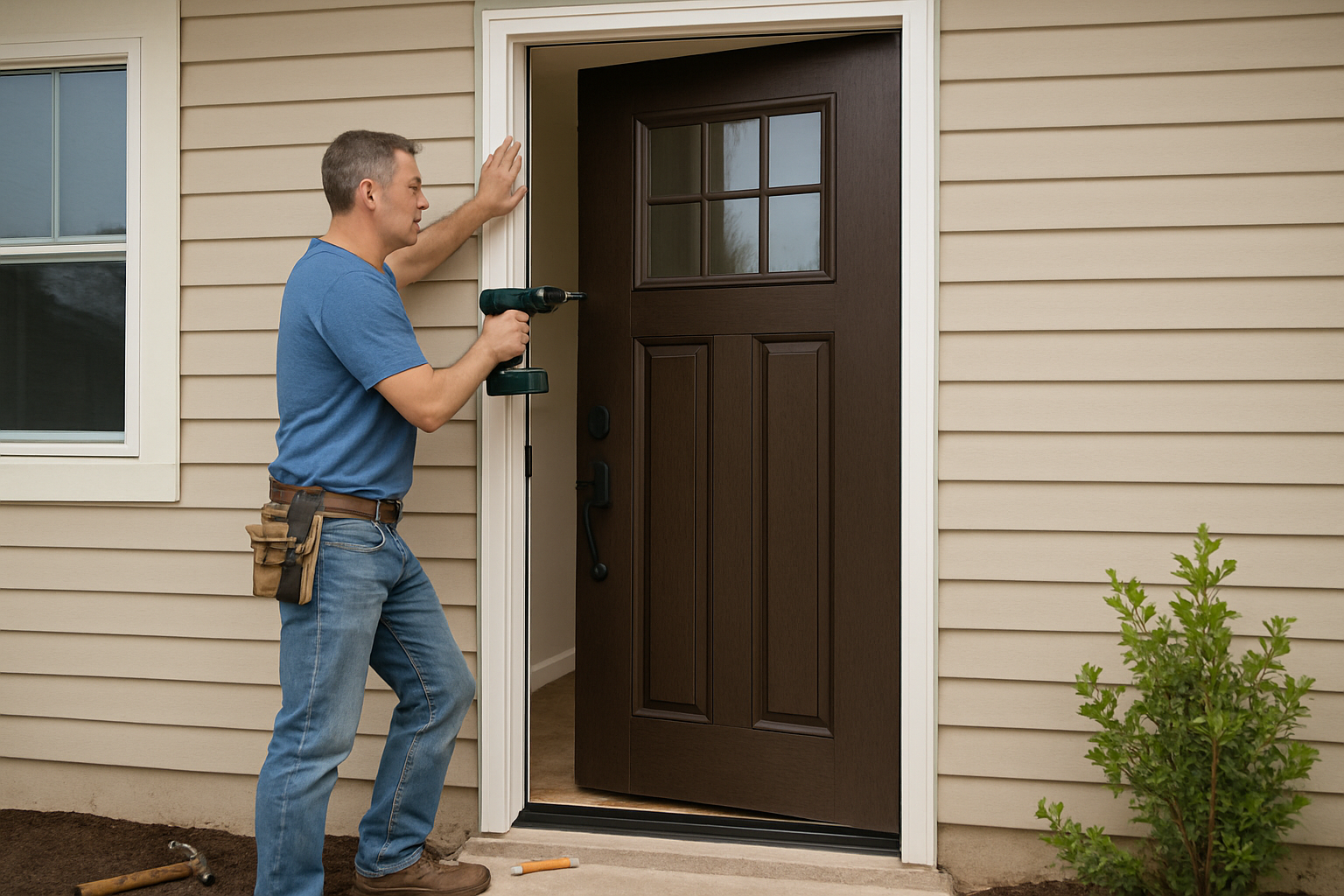
Once the opening is ready, the new door unit is positioned in place. Installers check that it is level, plumb, and square before securing it. Shims are often used to make small adjustments and create a precise fit.
This step is crucial because even slight misalignment can cause the door to drag, latch poorly, or leave gaps around the edges. A well-set door should open and close smoothly and sit evenly within the frame.
Secure, Seal, and Finish
After the door is aligned, it is fastened securely to the framing. Next, insulation and sealant are added where needed to prevent drafts and moisture intrusion. Exterior trim is then installed or replaced to create a polished appearance and protect the opening from the elements.
Hardware such as the handle set, deadbolt, strike plate, and peephole are installed or reattached. Finally, the door is tested to make sure it latches correctly and functions as intended.
Common Problems to Avoid
Poor Alignment
Misalignment is one of the most common issues during entry door installation. If the door is not level or square, it may swing open on its own, bind when closing, or fail to lock securely. Careful adjustments during installation help prevent these problems.
Inadequate Sealing
Even a small gap can lead to drafts, higher energy bills, or water leaks. Proper caulking, flashing, and weatherstripping are essential for keeping the door sealed against air and moisture. This is especially important in climates with heavy rain, snow, or strong winds.
Ignoring Frame Damage
Installing a new door over a damaged frame is rarely a good idea. Any hidden rot or structural weakness should be corrected first. Addressing the frame ensures the new door has a solid foundation and reduces the chance of future issues.
When to Hire a Professional
Some homeowners may feel comfortable handling smaller home projects, but entry door installation often requires more skill than expected. A professional installer brings the tools, experience, and precision needed to ensure a proper fit. This can be especially valuable when dealing with custom doors, older homes, or frames that need repair.
Hiring a professional can also save time and reduce the risk of costly mistakes. If you want your door to perform well from day one, professional installation is often the safest choice.
Maintaining Your New Entry Door
Once your new door is installed, simple maintenance will help it last longer. Clean the surface regularly, check weatherstripping for wear, lubricate hinges if needed, and inspect the seal around the frame seasonally. If the door begins to stick or draft develops, addressing the issue early can prevent bigger repairs later.
Conclusion
Entry door installation is an important home improvement project that affects security, efficiency, and curb appeal. With the right door, careful preparation, and proper installation, you can enjoy a beautiful entrance that performs well for years. Whether you tackle the project yourself or hire a professional, taking the time to do it right is always worth it.