
Cabinet Repair Services: An Overview
Cabinet repair services help restore the function, appearance, and durability of kitchen, bathroom, and storage cabinets without the cost of a full replacement. Over time, cabinets can suffer from loose hinges, broken doors, water damage, warped wood, damaged drawers, or worn finishes. Professional repair can address these issues efficiently, making your space look better and work better.
Whether your cabinets are part of a busy family kitchen or a commercial space that sees constant use, timely repairs can prevent minor problems from turning into expensive replacements. In many cases, fixing the damaged components is a practical and cost-effective solution that extends the life of your cabinetry for years.
What Cabinet Repair Services Typically Include
Cabinet repair services can range from small adjustments to more involved restoration work. A skilled technician will assess the condition of the cabinets and recommend the best repair approach based on the material, age, and extent of the damage.
Common Repairs
- Hinge and hardware replacement: Loose, rusty, or broken hinges, handles, and drawer slides can be replaced or tightened.
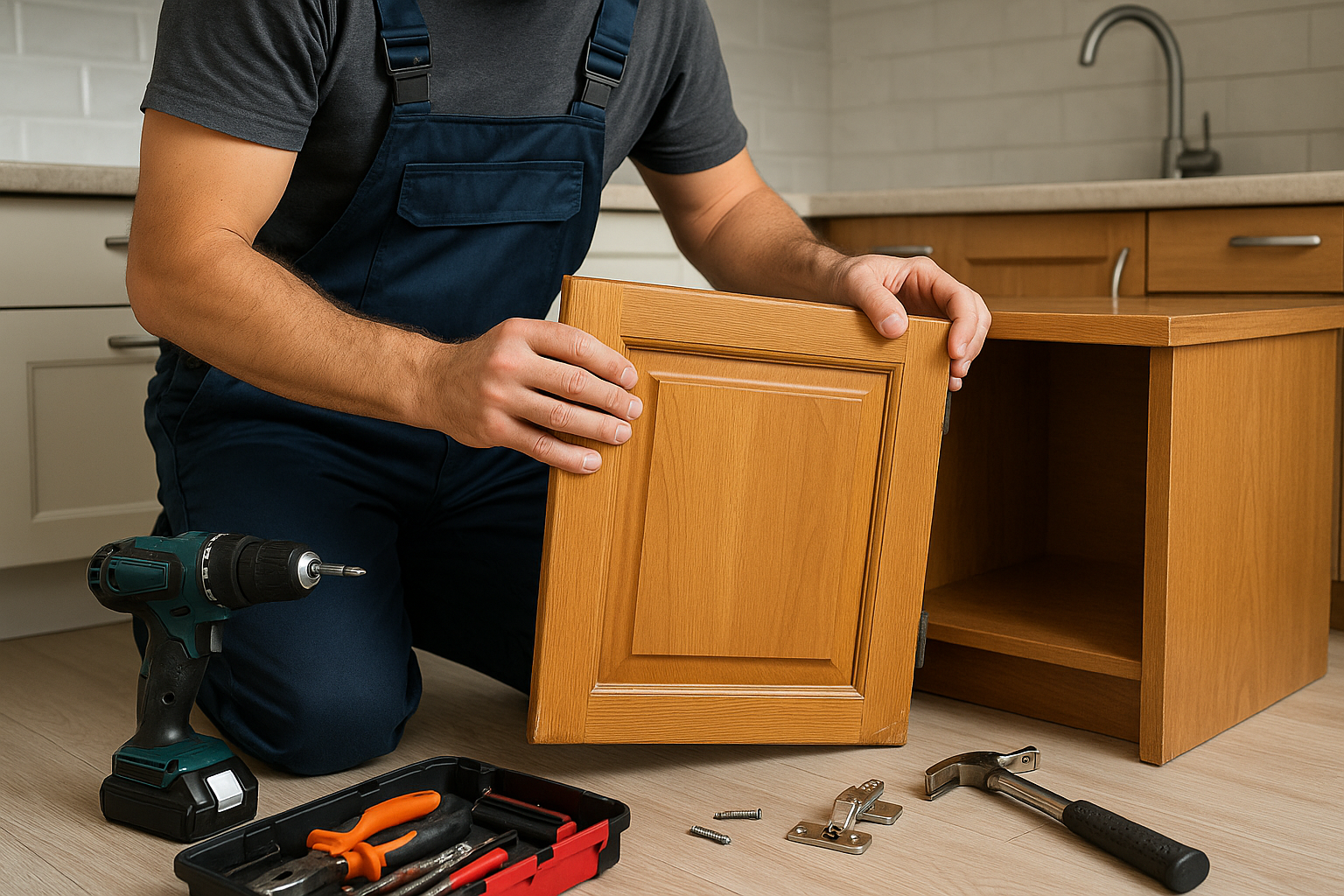
- Door alignment: Doors that sag, stick, or refuse to close properly can often be adjusted without replacing the entire cabinet.
- Drawer repair: Damaged drawer tracks, broken fronts, and warped drawers can be rebuilt or refitted.
- Surface repairs: Scratches, chips, dents, and peeling finishes can be patched and refinished.
- Water damage repair: Swollen wood, softened edges, and delamination caused by leaks or humidity may be repaired depending on severity.
- Structural fixes: Loose cabinet boxes, split panels, and failing joints can be reinforced for added stability.
Some providers also offer cosmetic upgrades, such as refinishing, touch-up painting, or replacing cabinet doors and drawer fronts while keeping the existing cabinet boxes intact.
Signs Your Cabinets Need Professional Repair
Not every cabinet issue is obvious at first glance. In many homes, the first signs are small inconveniences that become more noticeable over time. Knowing what to look for can help you act before damage spreads.
Warning Signs to Watch For
- Cabinet doors that won’t close properly or appear uneven
- Loose or wobbly handles, knobs, or hinges
- Drawers that jam, stick, or fall off their tracks
- Visible cracks, chips, or peeling laminate
- Swelling, discoloration, or soft spots from moisture damage
- Squeaking, sagging, or unstable cabinet structures
- Strong musty odors that may signal hidden water damage or mold
If you notice any of these issues, a repair professional can determine whether the cabinet can be restored or whether certain parts need replacement.
Why Repair Instead of Replace?
Cabinet replacement can be expensive and time-consuming, especially when the existing framework is still in good condition. Repairing cabinets is often the smarter choice when the damage is isolated and the overall structure remains sound.
Key Benefits of Cabinet Repair
- Lower cost: Repairs usually cost significantly less than a full cabinet replacement.
- Less disruption: Most repairs can be completed faster with minimal impact on your daily routine.
- Preserve quality cabinets: Solid wood or custom-built cabinets may be worth restoring rather than replacing.
- Eco-friendly choice: Repairing reduces waste and keeps usable materials out of landfills.
- Custom appearance retained: Repairs can maintain the original style and fit of your space.
For homeowners planning a future remodel, cabinet repair can also serve as a temporary or budget-friendly solution while preserving the option to upgrade later.
What to Expect During the Repair Process
Understanding the repair process can help you know what to expect and make it easier to choose the right service provider. While each project is different, cabinet repair generally follows a similar path.
Step 1: Inspection and Assessment
The technician examines the cabinets to identify visible and hidden damage. They may check hinges, drawer alignment, water exposure, finish condition, and structural stability. This assessment helps determine whether repair, partial replacement, or refinishing is the best option.
Step 2: Repair Plan and Estimate
After the inspection, you should receive a clear explanation of the needed work and a cost estimate. A good provider will outline parts, labor, timeframes, and any limitations, especially if hidden damage is found.
Step 3: Repair Work
Depending on the issue, repair work may include tightening hardware, replacing damaged components, sanding and filling surface flaws, or reinforcing cabinet joints. In some cases, matching materials or finishes may be required to blend the repair with the surrounding cabinetry.
Step 4: Finishing and Final Check
Once repairs are complete, the technician will test doors and drawers, confirm alignment, and inspect the finished result. The goal is to restore both appearance and usability so the cabinets function smoothly again.
How to Choose a Cabinet Repair Service
Choosing the right professional can make a big difference in the quality and durability of the repair. Look for a service provider with experience, good communication, and a strong track record of working with the type of cabinets you have.
Questions to Ask Before Hiring
- Do you specialize in cabinet repair or general handyman work?
- What types of cabinets and materials do you work on?
- Can you provide examples of similar repair projects?
- Is the estimate detailed and itemized?
- Do you offer a warranty on parts or labor?
It’s also helpful to read reviews, ask for references, and confirm that the provider is licensed and insured when applicable. Clear communication and a thorough inspection process are strong signs of a reliable service.
Tips to Extend the Life of Your Cabinets
After your cabinets are repaired, a few simple habits can help keep them in good condition. Preventive care is one of the best ways to avoid repeated damage and costly repairs in the future.
Maintenance Best Practices
- Wipe up spills and water immediately, especially around sinks and dishwashers.
- Clean cabinets with gentle, non-abrasive products.
- Avoid slamming doors and overloading drawers.
- Tighten loose hardware as soon as you notice it.
- Use cabinet liners in areas prone to moisture or heavy use.
- Check under sinks regularly for leaks or hidden water damage.
Routine care can preserve the appearance and performance of your cabinets while reducing the likelihood of major repairs later.
Conclusion
Cabinet repair services offer a practical way to restore damaged cabinets, improve daily function, and save money compared with replacement. From loose hinges and broken drawers to surface damage and moisture issues, many common problems can be fixed with the right expertise. If your cabinets are showing signs of wear, a professional repair service can help bring them back to life and keep your space looking its best.