
Why Kitchen Remodeling Matters
Kitchen remodeling is one of the most rewarding home improvement projects you can take on. The kitchen is often the heart of the home, where meals are prepared, conversations happen, and family routines come together. A well-planned remodel can improve daily function, increase storage, boost energy efficiency, and create a more inviting space for cooking and entertaining.
Beyond comfort and convenience, kitchen remodeling can also add real value to your home. Buyers tend to pay close attention to the kitchen, and updated finishes, modern layouts, and practical features can make a strong impression. Whether you want a small refresh or a full renovation, the key is to plan carefully and make choices that fit your lifestyle.
Start With a Clear Goal
Before selecting cabinets or countertops, define what you want your new kitchen to accomplish. Are you looking for more storage, better workflow, a brighter look, or a space that works for entertaining? Your goals will guide every decision, from layout changes to material selection.
It helps to think about what frustrates you in your current kitchen. Maybe the counters feel cramped, the lighting is too dim, or the appliances are awkwardly placed. Identifying these pain points early allows you to focus your budget on the improvements that matter most.
Set Priorities Early
Create a short list of must-haves and nice-to-haves. Must-haves might include more cabinet space, a larger island, or updated appliances. Nice-to-haves could include a wine fridge, open shelving, or decorative tile. This simple exercise makes it easier to stay on track if you need to adjust the project scope later.
Plan the Layout Carefully
The kitchen layout affects how smoothly the space functions. A beautiful kitchen still needs to be practical, especially in a room where multiple tasks happen at once. Common layout styles include galley, L-shaped, U-shaped, and open-concept designs, each with different advantages depending on the size and shape of the room.
Think about how you move through the kitchen while cooking. The classic work triangle, which connects the sink, stove, and refrigerator, is still useful for creating an efficient workflow. Even in modern kitchens with islands and larger footprints, keeping these zones close and accessible can improve usability.
Consider Traffic Flow
If your kitchen is part of a busy family home, make sure there is enough room for more than one person to move around comfortably. Door swings, drawer clearances, and seating placement all affect traffic flow. A good layout prevents bottlenecks and makes the kitchen feel more open and user-friendly.
Choose Materials That Balance Style and Durability
Kitchen remodeling offers a chance to define the look of the space, but style should always be paired with durability. Countertops, flooring, cabinetry, and backsplash materials need to handle daily wear, spills, heat, and frequent cleaning.
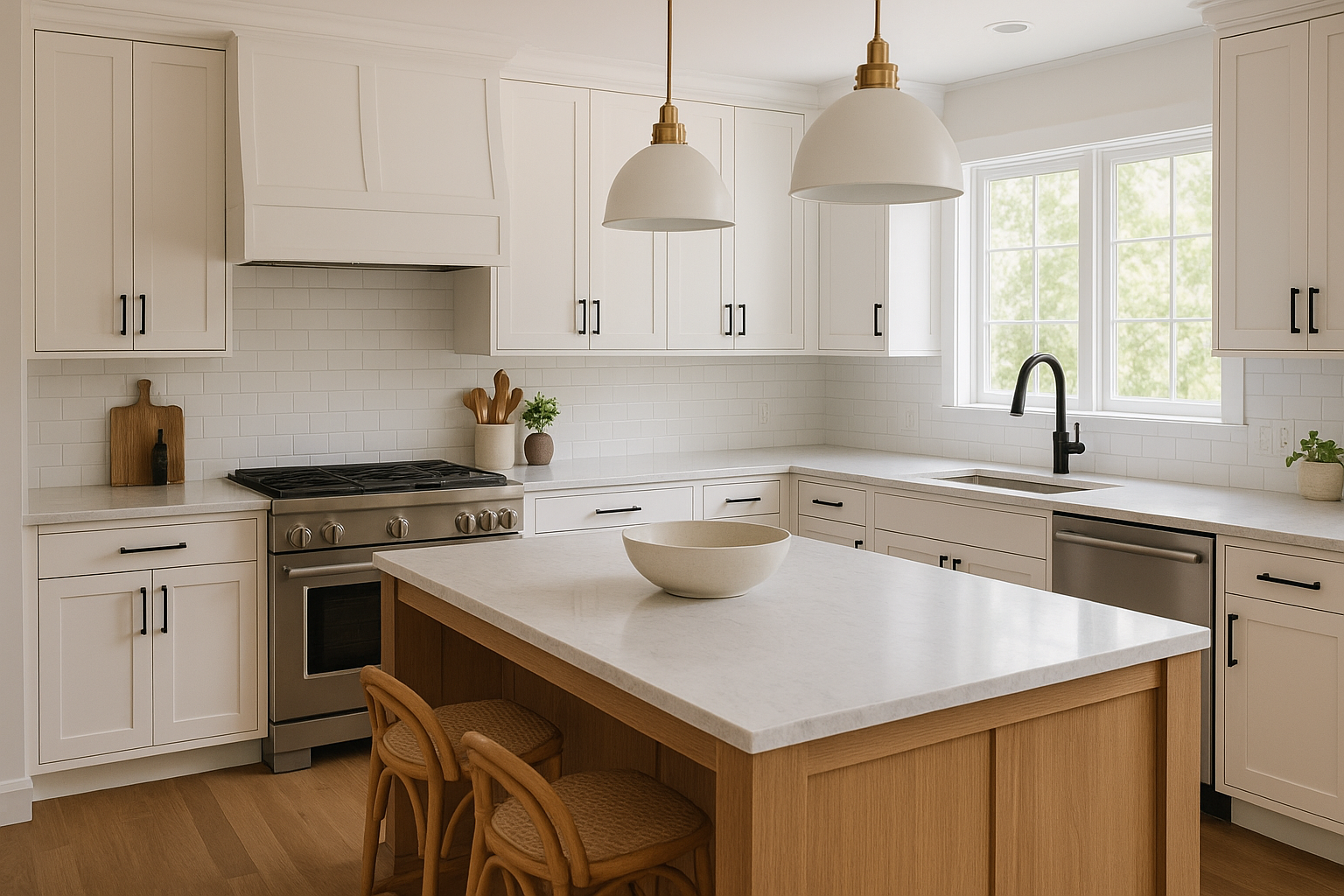
Quartz countertops are popular because they offer a polished look with low maintenance. Hardwood or luxury vinyl flooring can bring warmth while standing up to heavy use. Cabinet finishes should be chosen with both appearance and longevity in mind, especially in homes where the kitchen gets constant activity.
Cabinets, Countertops, and Backsplashes
Cabinets often take up a large portion of the kitchen budget, so it is important to select a style and finish that will remain appealing for years. Shaker cabinets, for example, are versatile and work well in both traditional and modern spaces. Pair them with a countertop material that fits your cooking habits and a backsplash that adds personality without overwhelming the room.
If you want a timeless design, stick with neutral base materials and use smaller details like hardware, lighting, or backsplash tile to introduce visual interest. This approach gives you flexibility if you want to update the look later without another major remodel.
Don’t Overlook Lighting and Storage
Good lighting can transform a kitchen. A layered lighting plan usually includes ambient lighting for overall brightness, task lighting for food preparation, and accent lighting for style. Under-cabinet lights are especially helpful because they reduce shadows on work surfaces.
Storage is just as important as lighting. Smart storage solutions can make even a small kitchen feel much more organized. Pull-out drawers, deep cabinets, corner organizers, pantry systems, and vertical dividers help keep everyday items accessible and reduce clutter on the counters.
Make Storage Work for Your Routine
Think about how you actually use your kitchen. If you bake often, keep mixing bowls, measuring tools, and baking sheets near your prep area. If you host frequently, create storage for serving pieces and glassware close to the dining or entertaining zone. Customizing storage to match your habits makes the kitchen easier to use every day.
Set a Realistic Budget
Budgeting is one of the most important parts of kitchen remodeling. Costs can vary widely depending on the scope of work, material quality, labor rates, and whether structural changes are involved. It is wise to determine your spending limit early and leave room for unexpected expenses.
Many homeowners find it useful to divide the budget into categories such as cabinets, countertops, appliances, flooring, lighting, and labor. This helps you see where the money is going and where you might be able to save. For example, choosing stock cabinets instead of custom ones may allow you to invest more in durable countertops or upgraded appliances.
Leave Room for Surprises
Older kitchens can reveal hidden issues once demolition begins, such as outdated wiring, plumbing problems, or uneven floors. Setting aside a contingency fund can help you handle these surprises without derailing the project. A realistic budget creates less stress and helps the remodel stay on schedule.
Work With the Right Professionals
Depending on the size of your remodel, you may need a designer, contractor, electrician, plumber, or cabinet installer. Hiring experienced professionals can save time, reduce mistakes, and improve the final result. If you are making structural changes or moving appliances and plumbing, professional help is especially important.
Before hiring anyone, check references, review portfolios, and get detailed estimates. Clear communication is essential. Make sure everyone understands the scope, timeline, and expectations before work begins. A well-coordinated team can make the remodeling process far smoother and less stressful.
Focus on Long-Term Value
The best kitchen remodeling projects are designed to look good and function well for years. Instead of following every trend, choose features that match your home and lifestyle. Neutral finishes, quality materials, and flexible layouts tend to age better and offer stronger long-term value.
If resale is a priority, think about broad appeal. Buyers often appreciate bright spaces, efficient layouts, ample storage, and updated appliances. Even if you are remodeling primarily for your own enjoyment, these elements help ensure your investment remains worthwhile over time.
Conclusion
Kitchen remodeling does not have to feel overwhelming when you approach it with a clear plan. Start with your goals, prioritize function, choose durable materials, and budget carefully. With thoughtful design and the right team, you can create a kitchen that is more beautiful, more efficient, and better suited to everyday life.